KARAOKE GODFATHERS
Suburban All-Stars
1993-2003
Independent
Writing about the Suburban All-Stars was not how I expected to use this week's album review as I downloaded Karaoke Godfathers on Monday. Then I spent most of the first half of the week listening to the album on repeat. It's lewd, it's dumb, and it's nonsensical, but it's all of those things on purpose. This is the best parody of the 2 Live Crew-style party records white people could ever imagine. Well, so long as you can accept some emphasis on rock and video game backbeats.
Most of the verses are performed by Ulysses S. Pipe (or "U.S.", both aliases for Jeff Gerstmann, video game journalist of Giant Bomb), though there are other performers. The other regulars are Alex Navarro and Ryan Davis, and while their contributions are amusing, it's really U.S. that delivers the best verses. There are other verses from a large number of anonymous friends, but those familiar with Jeff's video game coverage may recognize a few more voices. Some of the anonymous verses are unstoppable, though, including a stand-out on "Pimping in the 707."
Nothing even comes close to the album's sixth track, "Don't Mess (With The U.S.)" The lyrics are super-fun, U.S.'s aggressive tone is spot-on, the guitar riff (based upon Wild Cherry's "Play That Funky Music") is played with perfect tone, and the beat is a blast. It is also U.S.'s only solo track, though it sounds like one of the hooks may have been performed by Alex Navarro. It's short, varied, and awesome top to bottom. Even beyond the comedy value of the rest of the album, this song is fantastic.
The rest of the album is pretty cool, though. The album has some great party tracks, some really awesome beats, and some great verses. When all three come together, it's a bit embarrassing for some of the real hip-hop artists out there. You can legally download it here for free.
While it's hard to mention in the context of the rest of the review, it's worth noting that the two Uncle Brendan skits are readings from explicit erotic novels. They're funny, but don't blast this album in its entirety during a party.
4/5
HIGHLIGHTS: "In The Can In The Can," "Don't Mess (With The U.S.)," "Wack Ass Crew '99"
MISSED OPPORTUNITIES: There are none.
NEXT STOP: Hot Sauce Committee Pt. 2, The Beastie Boys
AFTER THAT: As Nasty As They Wanna Be, 2 Live Crew
Sunday, March 18, 2012
Sunday, March 11, 2012
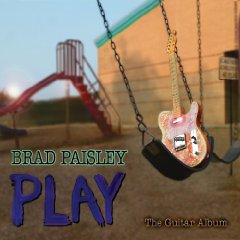
Play Review
PLAY
Brad Paisley
2008
Arista Nashville
Prod. by Frank Rogers
I should come out in front of this album and admit that I'm not much of a country music person. More so in that genre of music than any other, melodies, harmonies, and lyrical themes borrow liberally from inspiring classics and contemporary artists. However, I have a soft spot in my heart for the extremely lyrical and expressive guitar noodling that comes out of the combination of country and rock music. Most consider the genre long gone, the days of Duane Allman, Lynyrd Skynyrd, and The Outlaws being long behind us.
Maybe this is why Play feels like such a breath of fresh air. While there are a few very traditional country songs that neither offend nor excite on the album, this is Paisley mostly fooling around with his six strings both acoustic and electric, along with the occasional banjo. And, guys? The boy can play. He's no legend, at least not yet, but it's shocking how long this album lasts without ever feeling supremely repetitive. Much of what's here is his own take on the work of The Outlaws, but he also puts on the hats of Dick Dale, Eric Johnson, and BB King throughout the proceedings.
So, where does this album take its faults? Well, the country songs that appear are not so good that they'll convert opponents of the genre, and it's probably two or three songs too long. Meanwhile, although he pulls in a number of vocal and instrumental guests, none of them are as differentiable as, say, Duane Allman and Eric Clapton on Layla. But it's smart, it's fun, and it's probably worth your time. And, most importantly, it'll give you faith in the guitarists of our time once again.
4/5
HIGHLIGHTS: "Turf's Up," "Kentucky Jelly," "Cluster Pluck," "Cliffs of Rock City"
MISSED OPPORTUNITIES: "Departure," "More Than Just This Song," "What A Friend We Have In Jesus"
NEXT STOP: Derek & The Dominoes, "Layla And Other Assorted Love Songs"
AFTER THAT: The Allman Brothers Band, "At Fillmore East"
Brad Paisley
2008
Arista Nashville
Prod. by Frank Rogers
I should come out in front of this album and admit that I'm not much of a country music person. More so in that genre of music than any other, melodies, harmonies, and lyrical themes borrow liberally from inspiring classics and contemporary artists. However, I have a soft spot in my heart for the extremely lyrical and expressive guitar noodling that comes out of the combination of country and rock music. Most consider the genre long gone, the days of Duane Allman, Lynyrd Skynyrd, and The Outlaws being long behind us.
Maybe this is why Play feels like such a breath of fresh air. While there are a few very traditional country songs that neither offend nor excite on the album, this is Paisley mostly fooling around with his six strings both acoustic and electric, along with the occasional banjo. And, guys? The boy can play. He's no legend, at least not yet, but it's shocking how long this album lasts without ever feeling supremely repetitive. Much of what's here is his own take on the work of The Outlaws, but he also puts on the hats of Dick Dale, Eric Johnson, and BB King throughout the proceedings.
So, where does this album take its faults? Well, the country songs that appear are not so good that they'll convert opponents of the genre, and it's probably two or three songs too long. Meanwhile, although he pulls in a number of vocal and instrumental guests, none of them are as differentiable as, say, Duane Allman and Eric Clapton on Layla. But it's smart, it's fun, and it's probably worth your time. And, most importantly, it'll give you faith in the guitarists of our time once again.
4/5
HIGHLIGHTS: "Turf's Up," "Kentucky Jelly," "Cluster Pluck," "Cliffs of Rock City"
MISSED OPPORTUNITIES: "Departure," "More Than Just This Song," "What A Friend We Have In Jesus"
NEXT STOP: Derek & The Dominoes, "Layla And Other Assorted Love Songs"
AFTER THAT: The Allman Brothers Band, "At Fillmore East"
Friday, March 2, 2012
Bangarang Review
BANGARANG
Skrillex
2011
2011
Big Beat, Atlantic
Prod. by Skrillex et. al
See, this is why genre classifications suck. There are too many arguments as to what kind of music Skrillex puts out; while most people say that Skrillex is dubstep, dubstep purists will tell you that he’s either making “brostep” (a subgenre that seems to have been invented simply to define Skrillex and musicians inspired by Skrillex) or he’s just making house music. And, if I were trying to classify Skrillex’s newest EP, I’d be hard-pressed to actually tell you what Skrillex’s genre identity would be, and a track-by-track breakdown seems to be the only fitting way to write about the EP.
Skrillex’s Bangarang does not open strong; its first track, “Right In”, is a tragically standard wobble-bass affair, and while fans of the genre will still probably enjoy it, the song is not recruiting material. The track “Bangarang” (ft. Sirah) luckily picks things up with an excellent hook and set of vocal samples. Both tracks features vocal snippets throughout. These two songs, along with most of what’s available here, are certainly a bit different from his previous material, but not innovative in terms of the genre.
The writing collaborations are certainly of importance, and the first is with the absolutely legendary band The Doors. Shockingly, The Doors’ influence really does come through on multiple sections of “Breakn’ A Sweat,” but it would have been nice to not hear the words “Come on, baby, light my fire” in the song. In fact, it would’ve been nice to hear almost no traces of the stoner jam at all. Fans of The Doors will find themselves mostly disappointed in the track, as the song takes its cues from songs like “Light My Fire” and “Riders On The Storm.” A dance remix of these slower, more meditative songs goes against everything that makes those songs enjoyable. The Doors influences here just don’t work, and a heavier lean towards party songs like “Break On Through” and “Love Her Madly” would make a whole lot more sense. As it is, the track feels like one of the less interesting “YouTube dubstep remixes” of rock classics.
Thankfully, “The Devil’s Den”, a collaboration between Skrillex and Wolfgang Gartner, practically swoops in and saves the album, a high-energy video game party that this album desperately needed. The chiptune elements are reminiscent of the best stuff from the Street Fighter II and early PlayStation days, and they work fantastically with some thudding bass thrown under them. Skrillex is suddenly willing to let the energy tone down without having a gimmicky interview (“Breakn’ A Sweat”) and even comes up with some new patterns for his particular brand of wobble-bass and high-pitched electrical whines. If nothing else, it’s a supremely attractive song, and the first song you should probably hear from this album.
The next track and final writing collaboration on the album, “Right On Time,” is only notable for its all-too-short breakdown, a jumpy robot-freak out surrounded by incredibly repetitive club music and vocal samples. It’s not a very interesting track. The next track, “Kyoto”, invokes the return of rapper Sirah, opening with goofy “oriental” synthline that fails to impress. While Skrillex does respond to Sirah’s demand, “Yo, Skrill, drop it hard,” the track eventually turns into a heavy-metal inspired rap track (down to the shitty power chords.) This might be more interesting if Sirah’s verse was especially interesting, but it isn’t. Skip both of these songs.
Fans of the breakthrough single “Scary Monsters & Nice Sprites” will finally have something to enjoy in “The Summit”, a song featuring Ellie Goulding that takes on a similar electronica journey. It’s very pretty, it’s meditative, and it’s shockingly balladeering for Skrillex, never turning to wobble-bass or extremely high-pitched synth. The vocal fragments are reminiscent of the sort DJ Earworm will place in his year-end United States of Pop mash-ups, and the laid-back music is certainly more reminiscent of Earworm’s work than most of Skrillex’s stuff. I’m a big fan of Earworm’s work, and maybe it’s because I’ve felt that Earworm’s stuff has fallen off in quality over the last year, but I feel like I got something pretty wonderful out of “The Summit.”
It’s unfortunate, really. When Skrillex is doing what I might expect him to do on Bangarang, it consistently fails to be interesting. But when he turns towards chiptunes and ballads, I see the musician who caught my attention with his “Scary Monsters and Nice Sprites” EP who knows how to innovate and write some really classic music. iTunes and Spotify both feature orchestral suites of Skrillex’s older material, and it becomes evident that the man is definitely capable of producing some really brilliant and stirring music, and that certainly shows in the album’s best track. While something good can still definitely come out of Skrillex working within his usual confines in a song like “The Devil’s Den,” the magic definitely hits less often than it should, and this album will too often leave you wondering why you liked Skrillex in the first place.
2/5
HIGHLIGHTS: “The Devil’s Den” w/ Wolfgang Gartner, “The Summit” (ft. Ellie Goulding)
MISSED OPPORTUNITIES: “Breakn’ A Sweat”, “Right On Time”
CATALOG CHOICE: Scary Monsters & Nice Sprites EP
NEXT STOP: DJ Earworm, “United States of Pop 2008-2011”
AFTER THAT: Susumu Hirawasa, “Paprika OST”
Labels:
2011,
Electronica,
Not Good,
Rap,
Skrillex,
Wobblebass
Sunday, February 26, 2012
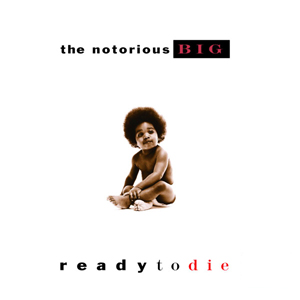
Ready To Die Review
Ready To Die
The Notorious B.I.G.
1994
Bad Boy Records
Prod. by Sean "Puffy" Combs, Easy Mo Bee, et. al
Tupac Shakur, Nas, Dr. Dre, and the Wu-Tang Clan currently lord over the popular perception of rap at the top of the 90’s. Well, and Sir Mix-A-Lot, too, but my point was meant to be that I perceive only legitimate fans of hip-hop music really leaning hard into The Notorious B.I.G., despite his critical acclaim and renown. Quickly, I shall explain why you probably ought to check out his debut.
At the heart of this album is the production. Puffy and Easy Mo Bee have created a ridiculous number of slick beats, and, somehow, they manage to instill a nice sense of variety in a huge number of low-key stoner jams. They fit with the darker tone of most of Biggie’s lyrics, but it’s the restraint they’re willing to show that’s to be rewarded. A shocking amount of time on the album is dedicated to a drum line and Biggie, and strings and piano lines come in nicely. There’s a few notable soul samples, funk guitars, and hooks, but they rarely take full focus. Still, these beats ride nicely and are a treat to hear.
But what makes this album special is Biggie's delivery and lyricism. His lyrics simply feel natural, a reasonable train of thought that never feels forced. Biggie famously composed verses in his head instead of on the page, and the result is a simplicity that never feels overwritten. His lyrics are simple, easy to hear and listen to, and come across smoothly. The delivery is just enticing, and something most rappers ought to envy.
Between the beats and the delivery, this album largely just rolls. It never gets seriously better or worse than its standard, and that’s certainly not a bad thing. If there are highlights to pick out, they’re the more party-focused tracks “Big Poppa” and “Ready to Die,” and if there are lows, they’re the skits, which don’t reprise as nicely as the rest of the album.
As an intellectual album, it’s one of many representatives of the black hip-hop culture of the early 90’s. As a cultural touchstone, it serves just as well as the work of most of the other East and West Coast rappers of the time period. The album is a lot more sexual than the violent work of Wu-Tang Clan or N.W.A. They’re also largely more depressed as well, as Biggie feels largely worn down by everything about his blackness other than the women he gets to have sex with all the time.
Ready To Die is not going to change your mind about hip-hop or rap. If you think it’s all about drugs and sex, the beats, lyrics, and skits will certainly not change your mind. Two of the four skits are roughly pornographic, with the short skit closing “Respect” really sealing the idea that I wouldn’t want to have this album playing in my car. But for those who see more to rap as music, or you simply don’t mind rap about drugs and sex, Ready to Die is an absolute treat from top to bottom.
5/5
HIGHLIGHTS: “Things Done Changed”, “Ready to Die”, “Juicy”, “Big Poppa”
MISSED OPPORTUNITIES: “Intro”, “Fuck Me (Interlude)”
NEXT STOP: Wu-Tang Clan, “Enter The Wu-Tang Clan (36 Chambers)”
AFTER THAT: NWA, “Straight Outta Compton”
Labels:
1994,
Biggie,
Five Stars,
Puffy,
Rap,
Sex Stories
Sunday, February 19, 2012
21 Review
21
Adele
2011
XL, Columbia
Prod. by Jim Abbiss, Adele Adkins, Paul Epworth, Rick Rubin, Fraser T Smith, Ryan Tedder, Dan Wilson
Adele
2011
XL, Columbia
Prod. by Jim Abbiss, Adele Adkins, Paul Epworth, Rick Rubin, Fraser T Smith, Ryan Tedder, Dan Wilson
The world loves Adele. Winning six Grammys just last week, she’s the toast of the town. But late Tuesday night, her interview with Vogue released in which she stated she’d take up to five years off from music to work on her relationships. I found myself inexcusably ecstatic; if it hadn’t been two or three in the morning when I learned this extremely exciting news, I probably would’ve meowed. The next day, she cut this rumor short.
“I’ve a few days off now, and then it’s the Brit Awards here at home and then I’m straight into the studio,” she writes. “BOYYAHH! 5 years? More like 5 days!”
I found myself hammerstruck. But as I thought about it, I thought “Why? Why was I so excited to see this woman that people really love leave the public eye for years, perhaps never to really be heard from again?” Seeing my repulsive joy at ruining other people’s beloved musical desires, I decided I was finally going to force myself to listen through Adele’s “21”, which I picked up months ago.
“I’ve a few days off now, and then it’s the Brit Awards here at home and then I’m straight into the studio,” she writes. “BOYYAHH! 5 years? More like 5 days!”
I found myself hammerstruck. But as I thought about it, I thought “Why? Why was I so excited to see this woman that people really love leave the public eye for years, perhaps never to really be heard from again?” Seeing my repulsive joy at ruining other people’s beloved musical desires, I decided I was finally going to force myself to listen through Adele’s “21”, which I picked up months ago.
And I found out? Well, it’s…okay?
Adele has a talented voice and a nice sense of songwriting, but she desperately needs to learn how to organize an album. Opening with “Rolling in the Deep,” obviously the reason she is famous today and probably one of the best songs of 2011, is a good choice. It’s a blast of energy, and it’s the song she performs better than any other. It’s rather unique, and it doesn’t make me instantly recall some other song at its best moments. And, best of all, it has those awesome back-up vocals, which are completely incomprehensible and all the better for it.
But good times do not last through this first half of the album. While its follow-up is a fun, tongue-in-cheek “I Heard It Through The Grapevine” callback titled “Rumor Has It” (that overstays its welcome just slightly,) the next three songs are the self-serious, somewhat insincere ballads Adele has come to be famous for. They are not good songs, and they are definitely the reason I never made it through 21 before this review. All the fire, the back-up vocals, and the energy of the first two songs vanishes and is replaced with warbling. The worst of these is “Turning Tables”, as it is especially stripped down and focused upon the poor behavior of the male. The others, “Don’t You Remember” and “Set Fire To The Rain”, do not paint Adele in the fairest pastels, and her insecurities appear within them, making them mildly more interesting than their predecessor.
Suddenly, a wonderful drum and slow jazz opening rolls into place as “He Won’t Go” takes the stage, and Adele’s wonderful sense of sass finally comes back into play. “He Won’t Go” is easily one of the highlights, and the back-ups finally back. The R&B elements finally return, and throughout the rest of the album, Adele will dance between R&B, gospel, Elton John, Spanish beats, and Stevie Wonder. None of it is quite as good as the classics it’ll remind you of (or even 21’s contemporaries in Cee Lo Green’s “The Ladykiller” or John Legend & The Roots’ “Wake Up!”) but it’s pleasant enough to listen through.
Sadly, the album closes on the intolerable “Someone Like You.” As I’ve stated previously, “Someone Like You” has gorgeous verses, a brilliant piano arrangement, and great lyrics. I just wish I could understand any of them, as Adele goes into full-on warbler mode during the song’s chorus, and her need for throat surgery is evident and unpleasant. The song would maybe benefit from a different singer, but I have a feeling that chorus will stop most from performing successful renditions of the song. It’s also inexplicable as the album’s ending; the album has clearly left its starting position as a series of self-serious, indulgent damnation ballads to become a lot more fun.
Perhaps a better mix of the not-so-good ballads and the not-quite-great R&B and pop songs throughout the album would save "21." As it stands, though, the album is an oddity, and one for which I don't understand the enthusiasm. While I am only listening to the aforementioned “Wake Up!” in retrospect, Cee Lo Green’s “The Lady Killer” is an excellent album that reflects R&B more wholly, elaborately, with modern production, and with higher quality songwriting all-around. Perhaps it’s the distaste for the 70’s swank that reminds people of old cop shows and blaxploitation films? Maybe it’s the fact that much of it is performed through the somewhat misogynistic parody persona of The Lady Killer? Or is there some distaste for Cee Lo’s voice that I don’t understand?
My estimation? People wanted to wait until a white person tried it before they’d buy it, and the fact that her story is sad and she required throat surgery helped her case. The album is fine, but unless this is very much your genre, stick to the highlights.
3/5
HIGHLIGHTS: “Rolling in the Deep”, “He Won’t Go”, “I’ll Be Waiting”
MISSED OPPORTUNITIES: “Turning Tables”, “Don’t You Remember”, “Set Fire To The Rain”, “Someone Like You”
NEXT STOP: "The Lady Killer," Cee Lo Green
AFTER THAT: "Otis Blue," Otis Redding
Sunday, February 12, 2012
Superpunk Review
SUPERPUNK
Landscapers
2012
Mindtech Recordings
Landscapers
2012
Mindtech Recordings
Electronica, trance, techno, drum and bass, dubstep, brostep, WHAT EVER, man. The people who categorize dubstep have almost become as over-technical as the people who categorize metal and punk, and I will not be a part of it. Basically, if the music is mostly produced with synthesized instruments, I will be calling it "electronica." Also, "trance" will mean a style of song, not a type of music.
With that out of the way, Landscapers' recent EP, Superpunk, is easily some of the most aggressive, bass-heavy electronica I've heard in some time. Each song finds itself winding deeply into completely madcap wobble-bass and non-dance rhythms, with pounding beats that'll make your subwoofer sob. If nothing else, Superpunk will find its way into my "bass-testing" playlist, reserved for trying out new speaker systems and headphones.
Of course, if Superpunk were just fat bass and nothing more, I wouldn't be writing about it. The EP manages to stuff rather distinct styles into its four tracks. "Arachnoise", the opening track (and the one that led me to investigate Landscapers in the first place) works off of an epic-scale orchestra, the sort you might hear in a goofy fantasy movie or a church in a Castlevania game, as well as a synth-line reminiscent of the early chiptunes. "Arachnoise" is not to be missed, even if it does not sell you on the rest of the album.
The other three songs are also pretty awesome, though. "So Magical" combines Landscapers' aggression with synthesized Vocaloid voice clips and a more traditional Euro-pop lead vocal hook, and attains a rather different tone from "Arachnoise." Your mileage may vary on the style it's playing with, but I have a lot of fun with the track. The eponymous "Superpunk" is perhaps the least exciting track on the album, as it combines hip-hop sensibilities with pretty traditional bass-heavy electronica sensibilities. It's less energetic than all the other songs, and while it's fine, it's also the least energetic track of the bunch. "Superpunk" also feels safer and less experimental than the rest. "Battle Axe" returns to the EP's video-game roots, but the focus here is more on the kind of power metal that Castlevania is more infamous for, and it's a return to the super-fun energy the rest of the EP carries.
It's hard to knock an EP with three good songs (especially when two of those are great), especially when "Superpunk" is not bad at all. I doubt the Superpunk EP will remain Landscapers' most interesting work, but for now, it serves as an exciting introduction to a group that only have a few EPs out. Give it a shot.
4/5
HIGHLIGHTS: "Arachnoise", "Battle Axe"
MISSED OPPORTUNITIES: "Superpunk"
NEXT STOP: "Scary Monsters and Nice Sprites", Skrillex
AFTER THAT: "Castlevania: Symphony of the Night", Michiru Yamane
Sunday, February 5, 2012
Lasers Review
Lupe Fiasco
Lasers
2011
Atlantic, 1st and 15th
Prod. by Lupe Fiasco, Charles "Chilly" Patton, Darrale Jones, et al
Lasers
2011
Atlantic, 1st and 15th
Prod. by Lupe Fiasco, Charles "Chilly" Patton, Darrale Jones, et al
I've had little experience with Lupe Fiasco. He's appeared on a few great tracks by some other excellent rappers, including his excellent verse on Kanye West's "Touch The Sky," but I've otherwise rarely been exposed to this rapper who ostensibly broke out years ago. Lupe's big hit early last year, "The Show Goes On", was my first exposure to a solo track of his, and I was not a fan. Not only did it sample "Float On," one of few songs I literally never want to hear again, it sampled it poorly, and the rap upon it was simply short of impressive.
Of course, discovering now that "The Show Goes On" is the specific song Lupe was forced to place on Lasers by producers is not shocking in the least, and the idea that he was specifically told to simplify his lyrics upon it explains quite a bit about the song. The rest of the album is more focused upon messages and morality than having a good time, and while a few other party tracks certainly pop up here and there, this is not a barbecue record the way one might imagine.
However, Lupe's sermon is not easily received. His lyrics often wander more than one might appreciate, and often I found myself wondering if the chap had said anything significant on a given song. It certainly does not help that his flow is focused upon tightness rather than expressiveness, as it's extremely hard to feel passionate about most of what's on the album. It's certainly an approach to go for keeping an extremely tight rap set where little can be criticized as explicitly poor, but it feels like most of these raps fail to take any risks. When his lyrics are more explicit and the raps become more "intellectual," they're often overwritten and too unsubtle, with "Words I Never Said" being the official track that goes too far. There are a few great lines ("The truth stings like Muhammad Ali") but most of the raps are forgettable to lightly abrasive.
Of course, the fact that most of the raps are forgettable turns out to be in service of the music, which is consistently good. There are a few really great beats on this album, and the rest are all pretty darn good. Those beats that emphasize real instruments over synth lines are definitely the highlights, but the synth lines are strong throughout as well. Lupe's tone is attractive for most of these songs even if it makes it hard to focus on what he's saying, and it makes the album a lot more fun than it might be otherwise. Meanwhile, the focus is largely upon featured artists over samples, with a trio of strong guest appearances by Auto-Tune MC MDMA. However, the hook on "Words I Never Said" proves that Skylar Grey's singing is officially rap poison after the borderline-oppressive "I Need A Doctor" and "Coming Home". I appreciate that she has fans in her pop-folk solo work, but can she keep her vocals out of hip-hop...forever?
The music on this album easily saves what otherwise might be a dull album. While the best songs tend to go in one ear and out the other, they are really fun, and a low-impact album like this one serves an important purpose. The beats are pretty consistently great, and while there might be a couple missteps, they're only boring rather than offensive.
However, "The Show Goes On?" Still one of my least favorites.
3/5
HIGHLIGHTS: "Till I Get There", "I Don't Wanna Care Right Now" (ft. MDMA)
MISSED OPPORTUNITIES: "Words I Never Said", "The Show Goes On", "All Black Everything"
NEXT STOP: "The Adventures of Bobby Ray", B.o.B.
AFTER THAT: "Late Registration", Kanye West
Subscribe to:
Posts (Atom)