Showing posts with label Rock. Show all posts

Tuesday, September 4, 2012

Fly By Night Review


FLY BY NIGHT
RUSH
1975
Anthem/Mercury
Prod. by Rush and Terry Brown

It’s obviously worth noting that I come into these Rush reviews with a slightly predetermined mindset. In any review of the band Rush’s music, I will do my best to displace my previous distaste for the band, but I will repeatedly make it clear that, in the past, Rush has most certainly not been my thing, and I am here to challenge that idea and try to enjoy a band millions around the world revere.

Sound the alarm; I really, really like parts of Fly By Night. As an album, it’s as deeply flawed as Moving Pictures, and the highs aren’t quite as high as “Tom Sawyer.” But Fly By Night exposes a Rush that is more interested in other people’s music than their own; only a couple of the songs on Fly By Night sound like definitive Rush anthems, while the rest seem to be Rush taking on other people’s sounds. Some of these experiments turn out really, really awesome; others work less well.

First, what works; “Anthem” and “Best I Can” are a rollicking force that is undeniable. “Anthem” is more mathematical than most of what appears on this album, but like “Limelight,” the band mostly stays together, letting guitarist Alex Lifeson take the lead instrumentation on the song. Geddy Lee and Neil Peart keep their rhythm in check, but the vocal by Lee is still grating on “Anthem.” It’s not enough to ruin the slick, somewhat blues-y ride, but a performance with a better vocalist would be highly engaging. Peart, in particular, manages to produce a drum beat that is fun to listen to without being overwhelming, a task Peart can find difficulty accomplishing. It’s moments like “Anthem” that let me remember Peart’s talent rather than find myself aggravated with his arrogance.

Honestly, though, I don’t think there’s a band that would top Rush’s performance of “Best I Can,” a song that is so non-definitively Rush that I wish, wish, WISH this had been their direction all along. “Best I Can” absolutely reeks of a fusion of blues-driven hard rock and pop rock at the same time; think the world’s best fusion of AC/DC and Elton John’s “The Bitch Is Back,” however anachronistic that may be. Lee is singing a harder, deeper vocal than usual as well, with a voice echoing Bon Scott and Brian Johnson on their best days. In case you can’t tell, I’m absolutely floored by how much I like “Best I Can,” down to its very Joe Perry riffs, its absolutely killer instrumentation on the hook, and a sweet guitar solo by Lifeson. While I can understand that it’s lacking in iconic moments (see “Tom Sawyer” drum fills, “Spirit of Radio” opening, etc.) it’s a fun, fun song.

There are a couple other songs that work, though not nearly as well as “Best I Can.” The third track, “Between, Beneath, and Behind,” is a fun (if overly mathematical) high-tempo jam. Moments of it remind me of “Ballroom Blitz,” but I would definitely rather listen to the Sweet classic every time; the hook’s attack is repetitive very, very quickly, leaving me indifferent every time. And “Making Memories” contains some quality guitar work as an attempt to take on the style of southern rock outfits like Lynyrd Skynyrd; Lifeson really nails that impression in the solo, which is highly technical and filled with twang. The rest of the song is a pretty fun acoustic jam with some great bass work by Lee.

Now, while half the impressions work shockingly well, the rest struggles to excite or entice me. “By-Tor And The Snow Dog” begins with a relatively unimpressive and standard Rush jam, which is too calculated and mathematical for my tastes; Lee’s vocal is shakier on this song than any other, as well. The second half of the song contains a long psychedelic jam, perhaps an attempt to capture what fellow “prog” outfit Pink Floyd had been up to on Meddle and Dark Side of the Moon, but it fails miserably to sound like anything other than aimless noodling. Considering there’s plenty of Pink Floyd that sounds the same way, I can’t blame them for failing, but it is still a failed experiment. Unlike some of these other songs, no member manages to do anything especially memorable or impressive, leaving “By-Tor” bloated and flaccid. These same words, bloated and flaccid, would probably describe my feelings on the rest of the album.

Of course, most people are probably surprised I’m not very into “Fly By Night,” the album’s lead single and title track. And it’s not bad, it’s just very, very boring. It’s distasteful to me for many of the same reasons I didn’t like “Vital Signs” or “Witch Hunt”; the song is aimless math gone awry, never really letting itself find an identity or escape the confines of its prison. The guitar solo is fine, but it fails to impress much more than your average Journey guitar solo, a comparison that is not complimentary.

“Rivendell” intrigues me, though. Now that there’s Peter Jackson’s Lord of the Rings to define that saga, perhaps it’s impossible for me to truly sift back into the world of Tolkein’s imagination, but “Rivendell” does momentarily evoke a very small amount of the energy I remember feeling towards The Hobbit. That said, it’s miserably performed by Lee’s weak vocal, it’s excessively long at almost 5 minutes, and nothing changes after the first chorus is reached. But if “Rivendell” were one of the few windows into Tolkein’s world, I could imagine that it’s a relatively decent success in that department.

Overall, Fly By Night is an interesting sonic collection, especially for fans of Rush. It’s this moment in musical history when Rush didn’t really know who they wanted to be. This is the moment just before Rush became one of the most ego-centric, sonically self-feeding bands in the world; this is when they were listening to everyone else and putting together anything that stuck. It’s exciting for the same reason Rubber Soul is a fascinating hinge in the career of The Beatles, or for the same reason we should all be excited for Green Day’s ¡Uno!/ ¡Dos!/ ¡Tres! trilogy, or Muse’s electro-heavy The 2nd Law. And while Rush’s impressions mostly pale in comparison to the originators of the style, some of these impressions are worth hearing on their own merits.

3/5
HIGHLIGHTS: “Anthem,” “Best I Can,” “Making Memories”
MISSED OPPORTUNITIES: “
By-Tor And The Snow Dog,” “Fly By Night,” “Rivendell”
NEXT STOP:
Aerosmith, “Toys In The Attic”
AFTER THAT:
Elton John, “Goodbye Yellow Brick Road”

Friday, August 17, 2012

Wish You Were Here Review


WISH YOU WERE HERE
PINK FLOYD
1975
Harvest, Columbia/CBS
Prod. by Pink Floyd

Is it strange that I am finding Wish You Were Here to be Pink Floyd’s most depressing disc? I mean, it’s far less depressing than The Final Cut, but that is largely because The Final Cut is mostly unlistenable. But Wish You Were Here evokes sadness different from that of the following Waters-focused albums. While a juvenile form of the cynicism that envelops Animals and the first disc of The Wall slithers into the album, it is bookended by mournful odes; while still personal, they are a more shared experience, based upon the mental degradation of former Floyd frontman Syd Barrett. While the album is largely dedicated to his memory, it lives beyond it, and intimate knowledge of the band’s history should not be necessary to enjoy the simple elegance of the album.

The dynamics of Pink Floyd are on pure display here. The music shifts from gorgeous to spacey to aggressive to rollicking time and time again, and no song is longer or shorter than it probably should be. These aren’t playlist songs, though; “Shine On You Crazy Diamond,” a gorgeous ballad with multiple shifts, is split into two fifteen minute parts, and even the shortest song, the cynical “Have A Cigar,” is over five minutes long. Still, there’s a dramatic shift between Dark Side of the Moon and Wish You Were Here; Dark Side of the Moon carried far more jazz in its roots, while Wish You Were Here is a more rock-focused album.

While the lyrics and songwriting credits shift largely from guitarist David Gilmour to bassist Roger Waters, Wish You Were Here is home to most of Gilmour’s best guitar work. While Dark Side of the Moon has already come and gone, and though “Comfortably Numb” looms on the horizon, none of his work places quite as much emphasis on beauty as Wish You Were Here. Both “Shine On You Crazy Diamond” and “Wish You Were Here” carry long sections where Gilmour’s guitar is given first chair, and it is the most melodic and sustained in his career. His acoustic guitar playing receives a limelight almost throughout, the only exception being “Have A Cigar,” perhaps the most open and brazen torching of the music industry Pink Floyd has ever put out, with rollicking guitar lines throughout.

Sadly, the musical anarchy of these critiques is facile in comparison to Dark Side of the Moon’s “Money,” and both “Welcome to the Machine” and “Have A Cigar” simply feel out of place between the more personal dedications of the bookends. Waters isn’t a master of this cynicism yet, and the digs at the industry almost feel token. They are definitely musically interesting, though; “Welcome to the Machine,” in particular, has a lot of great acoustic guitar work, the sort that The Wall uses on “Is There Anybody Out There?” to great effect. And keyboardist/synthesizer wizard Richard Wright goes into hysterics throughout, proving his efficacy to the band with “Machine” and “Diamond” time and time again. But “Machine” and “Have A Cigar” are too broad and impersonal to be more than musically interesting; “Machine” would have fit better on Meddle or Side Two of The Wall, while “Have A Cigar” is the sort of boogie that could have divided “Goodbye Blue Skies” and “Empty Spaces” moderately well.

The larger narrative of Wish You Were Here is confused; the critiques of the music industry simply feel out of place next to the beautiful ballads bookending the album, and a longer middle section might have made the album feel a little more complete. The critiques seem to echo a sort of regret or envy for the type of music Barrett would have liked to keep making, a sensation that Pink Floyd had “sold out.” However, this bitterness is still too distant to truly be affecting; on Wish You Were Here, all one needs to follow is the mourning this group of friends feels towards the loss of the one who brought them all together. Or simply play audience to a group of extremely talented musicians playing the most simplistic and beautiful soundscapes they’ve accomplished thus far.

4/5

HIGHLIGHTS: “Shine On You Crazy Diamond (Parts I-V)”, “Wish You Were Here”, “Shine On You Crazy Diamond (Parts VI-IX)”
MISSED OPPORTUNITIES: “Welcome to the Machine,” “Have A Cigar”
CATALOG CHOICE: The Wall (Note: For those looking to understand what kind of musical mind Barrett was, check out Piper At The Gates of Dawn)
NEXT STOP: Yes, “Close To The Edge”
AFTER THAT: The Who, “Tommy”

Friday, August 3, 2012

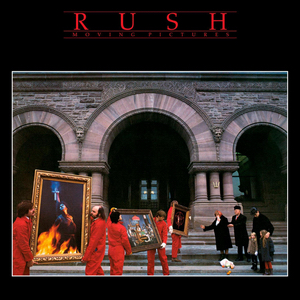
Moving Pictures Review


MOVING PICTURES
RUSH
1981
Anthem/Mercury
Prod. by Rush & Terry Brown

It’s obviously worth noting that I come into these Rush reviews with a slightly predetermined mindset. In any review of the band Rush’s music, I will do my best to displace my previous distaste for the band, but I will repeatedly make it clear that, in the past, Rush has most certainly not been my thing, and I am here to challenge that idea and try to enjoy a band millions around the world revere.

Rush’s Moving Pictures is probably their most accessible record. With multiple classic rock staples, its place is cemented throughout the annals of rock history. However, I find it hard to recommend Moving Pictures, which is ultimately a collection of songs rather than a concept album, to anyone who has heard these songs extensively through classic rock radio.

Yes, “Tom Sawyer” is a brilliant piece of music on a fresh listen; who could deny that? Its trance-like synth and guitar is just about perfect, and it's one of the most unified songs the band's ever had. It's one of few times a song was clearly written around a series of drum lines Neil Peart had created, and it's wildly successful, though it's worth noting how much of a team player bass player Geddy Lee manages to be here as well. The vocals on the track are still as mediocre or frustrating as most Rush songs (your mileage will always vary in regards to the caterwauling of Geddy Lee) but they don't really detract from the quality. To those who would deny the awesomeness of the famous drum fills on the studio version of the song, I salute you for entering a realm of Rush denialism that eclipses my own.

But parts of “Tom Sawyer”, “YYZ”, and “Limelight” fail to impress after years of exposure. They’re high-energy, they’re well-crafted, and they certainly stand out more successfully than some of Rush’s other songs. But the big punches in "Tom Sawyer" and "YYZ" are moments of intense technical skill rather than beauty or humanity, and so the “songs” serve as vehicles for moments of a good show. Meanwhile, "Limelight" has always seemed like a song that belonged to another band, and on multiple listens of the album, I simply lost focus during the song.

Alex Lifeson’s guitar contributions are rarely exciting throughout Moving Pictures, and every Lee vocal bounces between tolerable and distracting. This, of course, leaves Rush with their most famous attributes; Lee’s bass-playing and Neil Peart’s drumming, both regarded as world-class players. Outside of “YYZ,” Lee does not receive center stage often, and yet he continues to play as though he’s the only man on stage. Basslines on “Limelight” and “The Camera Eye” force through unnecessarily, leading to a handful of jumbled moments. These are quality basslines, but they’re often played at inopportune times. Peart is much guiltier of this problem, playing ludicrous drum parts on “Red Barchetta,” “Limelight,” and “Vital Signs” that distract far more than they add. I’ll say once again that I believe Rush is an extremely talented trio of players that have a tendency to compete with each other for the listener’s focus rather than write a cohesive song.

As for the non-radio tracks, there’s enough to like that a fan of the band’s style might adore Moving Pictures, but those that aren’t crazy about Rush’s style won’t find much to love in the other songs. “Red Barchetta” remains a casualty, as Lifeson’s best guitar riff is overshadowed by Peart’s excessive drum lines. “The Camera Eye” is actually a very enjoyable collection of different sections, but many of the riffs found in the 11 minutes never really evolve into anything that earns the run-time. “Witch Hunt” and “Vital Signs” are fine songs that simply fail to differentiate themselves from the pack.

3/5
HIGHLIGHTS: “Tom Sawyer,” “YYZ,” “Limelight”
MISSED OPPORTUNITIES: “Red Barchetta,” “The Camera Eye”
NEXT STOP: Yes, “The Yes Album”
AFTER THAT: Muse, “Black Holes and Revelations”

Next stop in regards to Rush: Their 1975 album Fly By Night.

Sunday, July 29, 2012

MUSIC IN 2012 - The Year So Far


I’ve gone through Moving Pictures once now, and I’m still working on that review. In the meantime, enjoy this video-laden post that shows my current consciousness of the music industry, which is probably a bit limited.

Is it just me, or did things get weird while I was out?

I exited in early March, just as fun., Gotye, and Carly Rae Jepsen were rising to superstardom, the former and latter of which have released follow-ups that haven’t captured the public imagination with quite the same verve (though “Some Nights,” easily my favorite song from a shockingly good album, is apparently gaining traction at #14 on the Billboard Hot 100.) As far as all their songs go, I’m a pretty big fan and want to hear more, though Jepsen’s “Good Life” is pretty dull.


But since then, the artists that usually excite me have been failing, and others have been seriously gaining. I missed R. Kelly’s new album (though the lead single, “Share My Love,” is pretty much a permanent summerjam) so he still has a chance to wow me, but I’ve been underwhelmed by new outings by Usher, Kanye West (whose “Mercy” I maintain is one of the worst songs he’s ever put together), Train, Katy Perry, and B.o.B.

And am I crazy, or do Pitbull and Nicki Minaj have two of the best-produced pop songs of the entire summer?


I can’t get over the beat on “Back In Time,” and I’m practically jumping for joy at the prospect of its sequel featuring Kanye and Enrique Iglesias. And, well, as for “Starships,” Pentatonix is to blame for sending me down a bad, bad path with their brilliant cover of a song I already have to admit I liked.


They both carry this bizarre dichotomy of combining modern dance production with throwback guitar and hooks. In a weird way, they’re both very decidedly 90’s.

Speaking of the 90’s, how did Green Day and No Doubt suddenly pull ahead of everyone else to come and crush anything alternative can throw at them? Green Day’s releasing three albums (!) in the next six months, and No Doubt is releasing their new album Push & Shove the same day as Green Day’s ¡Uno! Between the two lead singles, I find myself leaning heavily towards No Doubt, who I have never been a huge fan of before now. That said, of the Green Day albums (three?!?) the second is the more “garage”-focused album, so that’s probably the one for which I’m really excited.


That’s not to say nothing’s happening in the alternative scene. The Dirty Projector’s new album blew my socks off the first couple times I listened to it, so expect a review of that relatively soon. Fun.’s album, Some Nights, is actually pretty darn excellent. And that’s ignoring, of course, that Metric, The Smashing Pumpkins, Slash, The Hives, Tenacious D, and Jack White all came out with albums I haven’t listened to yet.


To make an awkward transition, Fiona Apple and Norah Jones have both released new albums that are being adored, while Regina Spektor came out with something new as well. Now seems as good a time as any to jump into a genre with which I am highly, highly unfamiliar.

Hip-hop has been mostly dead so far this year. Cruel Summer, the G.O.O.D. Music collaboration album, has also been delayed into September, and nothing came of the supposed Outkast reunion that was potentially going to happen this year. I do need to listen to Nas’s Life is Good, though, as it’s supposedly very solid.


Frank Ocean’s R&B smash Channel Orange is perfectly pleasant, but on my first listen I wasn’t blown away by it. I’ll be sure to try it again pretty soon, though. Again, there’s R. Kelly and Usher to check out as well, and Justin Bieber’s voice drop has me tempted to give him another shot with his new album. Chris Brown is still being allowed a career for some reason, and I’ll continue to ignore him. As far as quality vocals go, I’ve mostly been distracted by the really excellent Pentatonix EP, which you really ought to check out.


Things are getting weird on the pop/rock scene, though there’s still plenty of the same drivel that’s been being played for years (looking at you, Guetta and Flo Rida.) As far as electronica goes this year, I haven’t gotten to hear very much since Bangarang. And while there’s not a ton of albums to be excited for, it’s been a period of surprises and, well, change. That’s pretty darn exciting in and of itself.

Saturday, July 28, 2012

RUSH - A Return


I don’t remember if I’ve made it clear in my previous blogs (if so, it was likely during my Lamb of God review) but I really, really dislike Rush. I find them to be a group of talented players who write music to flagrantly display their talent rather than put together something cohesive. I believe the only thing holding most of Rush’s music together is the truly awful vocals of Geddy Lee, a piece I regularly cannot abide.
What’s more, Rush isn’t the most talented band in the world, so where do they get off? Sure, their major competitors in the field either do exactly what Rush does in an effort to show off (read: most prog, after Rush) or have broken up as of long ago (Led Zeppelin, The Who, Derek & The Dominos,) but that does not give them permission to play the full-band equivalent of Yngwie Malmsteen.

And yes, there are a few Rush songs I like. “YYZ,” “Tom Sawyer,” and “The Spirit of Radio” all have their own merits, and “Limelight” is actually just a really excellent song. And their role in the Jason Segel comedy I Love You, Man is indelible and hilarious. But most of the rest of what I’ve heard through the radio is either mindless drivel or (at least partially) unlistenable.


This summer, I intend to give them the old college try. Why? Because people adore them, and after three years of maintaining that Rush is my least favorite band, it’s time to challenge the beast once again. My musical tastes have drastically changed since I held that opinion, so, who knows? Maybe I’ll come out of all this liking them.

As a result, you can expect three Rush reviews by the end of August. No, they will not necessarily all be in sequence, and yes, they will be chronologically out of order. I’ve been recommended to go listen to Moving Pictures (an album I own and once liked,) then Fly By Night (whose title track I at least somewhat revile at the time of this writing,) and then, lastly, 2112 (whose title track I most certainly found unlistenable last time I gave it a shot.)

I’m moving the files for Moving Pictures onto my computer with better speakers now. Wish me luck.

Sunday, July 22, 2012

Overexposed Review


OVEREXPOSED
Maroon 5
2012
A&M/Octone
Prod. by Max Martin, Noah “Mailbox” Passovoy, Shellback, et. al.

Those of you buying Overexposed to learn more about Maroon 5 as a band had best steer clear. Overexposed is clearly an Adam Levine affair, and it’s a series of pop songs that ping-pong between their own hit, “Payphone,” and an imitation of the pop stylings of Coldplay.

Perhaps similarly to Mylo Xyoto, you’ll occasionally wonder if there really is a band behind Adam Levine. The first three songs do very little to justify the album as anything other than an Adam Levine solo record, including the six-writers-pop-starlet “Payphone,” which has never very much impressed me beyond a nice drum line on the verses. However, the guitarist, James Valentine (who helps to write a third of the songs on the album, though not the guitar-heavy ones) comes to life on “Lucky Strike,” a moment that finally aims for the energy of “Moves Like Jagger” last year. The rest of the band is hidden behind your standard synth-pop backing, but it’s a nice reminder that there IS another member to Maroon 5.

However, album then sinks back into washed out pop nonsense. It’s perhaps telling that I have trouble differentiating most of these songs from Rebecca Black’s “Friday.” These aren't especially good pop hooks or productions, and it's overall a very meandering affair. An effort is made to return focus to bass player Mickey Madden on “Lady Killer” (for which Madden actually receives a writing credit) but it’s not quite enough to make his presence notable. The only break from the monotony of completely disposable candy before the finale is the ninth track, “Sad," which is perfectly fine but not lyrical or virtuosic enough to propel it beyond the album. The finale, “Beautiful Goodbye,” is destined to become a moderately popular single or concert closer, but it’s still not especially different from anything before it. There are a couple of iTunes bonus songs that fail to impress any memories upon me, leaving the original finale as the superior place to stop.

Credit must be given to drummer Matt Flynn for his mostly thankless job as a drummer on what really amounts to a pop album. Flynn manages to consistently contribute lines that are more interesting than the songs require without ever distracting the listener from the song. Flynn’s drums on this album are actually a strong example of the kind of more technical drumming I like, in comparison to the stylings of Peart on Rush songs.

Spotify seems to have an exclusive performance of Al Green’s “Let’s Stay Together” that drops all performance by members other than Levine, Valentine, and rhythm guitarist Jesse Carmichael. It perhaps summarizes the entire experience that no part is truly impressive or even exciting, no matter how pretty Levine’s voice can be, as the instrumentation never comes in to back him up.

I booted up “Songs About Jane,” the breakthrough album with “This Love” and “Harder to Breathe,” for the first time in years yesterday for comparison’s sake. It opened my eyes and saddened me as I laid witness to the fact that these are talented players when given the opportunity to actually perform. Here, Maroon 5 is effectively reduced to Levine and session musicians.

2/5
HIGHLIGHTS: “Daylight,” “Lucky Strike”
MISSED OPPORTUNITIES: “One More Night,” “Doin’ Dirt”
CATALOG CHOICE: Songs About Jane
NEXT STOP: A Rush Of Blood To The Head, Coldplay
AFTER THAT: C’est Chic, Chic

Sunday, January 29, 2012

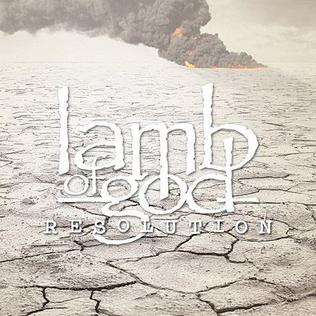
Resolution Review


RESOLUTION
Lamb of God
2012
Epic, Roadrunner
Prod. by Josh Wilbur

Sometimes, it takes a reminder to realize that purely competent can sometimes feel pretty darn good. Lamb of God's most recent release is pretty much everything you could ask for from a metal album these days, and even if nothing is done spectacularly, it's all done well enough that it'll sell you on the whole ordeal quickly. The album is a high-octane release of strong guitar work, and the band behind them is tight enough that the experience is something of an aggressive treat.

That said, this album is almost entirely appealing to a niche. While an effort has been made to offer a couple moments with melodic vocals, it's largely a screaming affair one would associate with death metal, and the experience is an extremely technical and dour affair with a few moments of light material mixed in. While I usually am not a fan of screaming, this seemed neither especially good or especially grating, and I was able to ignore it within a few songs on the album. Those who are completely turned off by the direction metal has been on since about 1982 should almost definitely steer clear; however, even those who aren't major fans of the genre should find a song or two they'll enjoy.

The largest praise I can generate for the album is that it contains almost exclusively excellent guitar work. While little of it is actually memorable, every song is well performed, and it varies between more standard thrash metal fare, some intelligent, restrained solos, and some excellent acoustic material. The rhythm section performs admirably, too, though they are not the focus of the songs written here.

The songs themselves are certainly the weakest aspect of the album. They're all totally fine, but they're written to be technical showpieces and aggressive tracks rather than songs. Almost every song here will be excellent as part of a concert, but I could not name one I would ever choose to seek out before my personal favorite metal songs, which are all generally considered "classics" rather than more modern material. While I do describe these as technical showcases, however, I need to point out that they are definitely not progressive metal tracks; the technical ability here is a band-focused unity as opposed to the talent show contest experience one finds listening to a more traditional progressive rock band like Rush. As a result, I found something to enjoy with this album in its current mix, which allows for a great hit of bass drum on all of its tracks.

While I'm certainly no expert of the genre, I have always found myself intrigued, and Resolution has intrigued me to the point where I intend to seek out more Lamb of God material. For those unaccustomed to metal that don't actively hate screamed vocals, I suggest checking it out.

3/5
HIGHLIGHTS: "Straight For The Sun," "Desolation," "Barbarossa," "King Me"
MISSED OPPORTUNITIES: "Guilty," "Cheated"
NEXT STOP: Kill ‘Em All, Metallica
AFTER THAT: Paranoid, Black Sabbath